
Use cases
Use cases
- Represent an agreed asset or entitlement on a supported network.
- Coordinate token administration with an application or business workflow.
- Evaluate token infrastructure and related services before procurement.
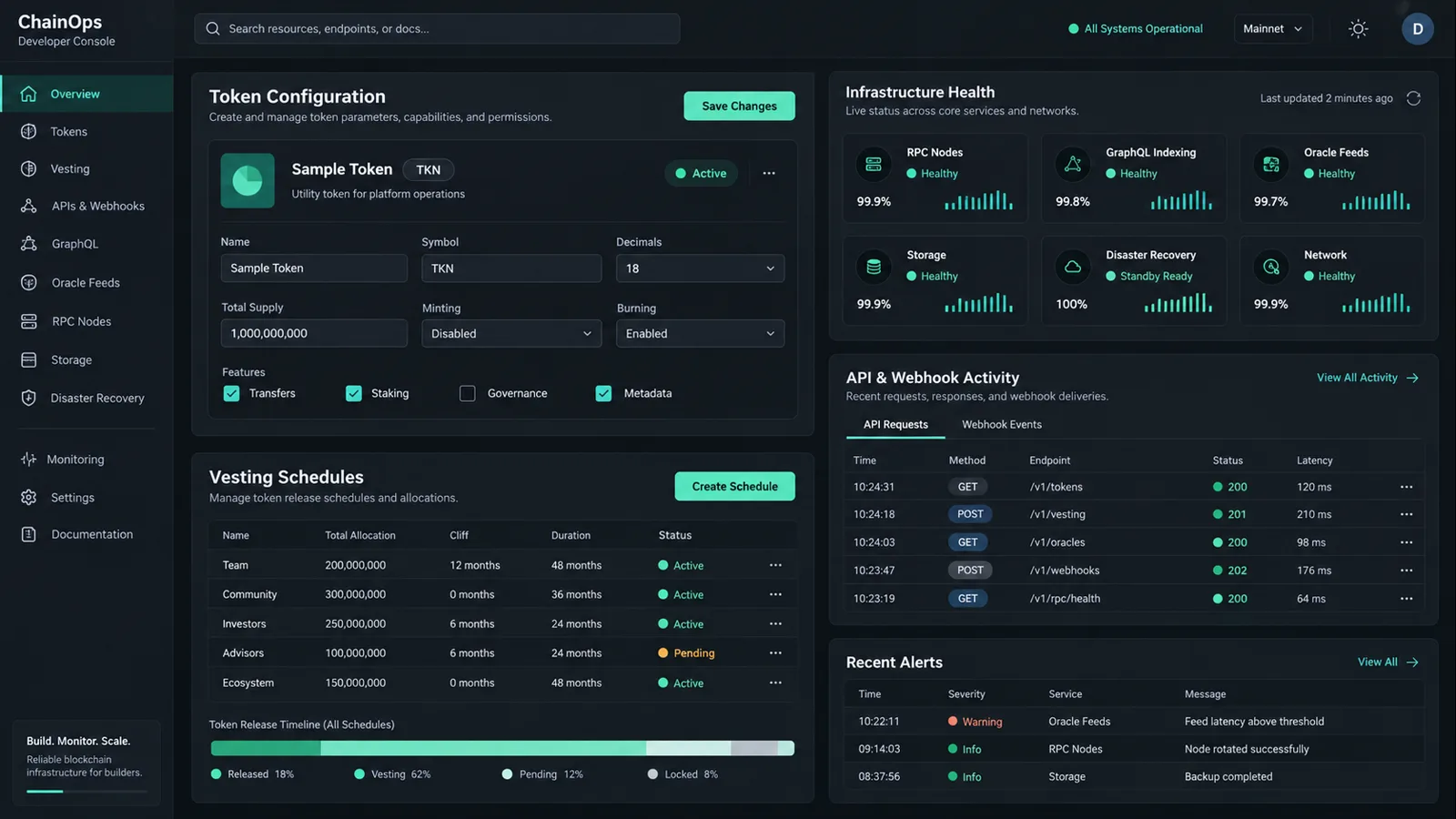
Solutions
Connect token product choices with issuance, administration, user access, operational support, and the systems around an asset. Begin with defined responsibilities rather than assuming a token name implies a complete operating service.
Business challenges
Token initiatives cross product, operations, security, and commercial boundaries. The useful first step is to make those boundaries visible.
Relevant products
Explore the existing blockchain catalogue and its token category, then use the configurator to define an eligible service scope.
Logical architecture
The asset model, permissions, applications, and network services form separate design concerns that should be reviewed together.
Use cases
Deployment considerations
Specify the network and environment, key and custody boundaries, administrator roles, transaction policies, application responsibilities, and ongoing operational ownership. These are discovery questions, not assumed defaults.
Integrations
Commercial engagement
Compare published products first, then submit a configured scope or request a proposal for integration work. A token use case does not automatically include custody, legal structuring, liquidity, or exchange access.
Documentation
Use the existing catalogue, token category, and pricing pages to verify current product scope and available commercial records.
Trust and responsibilities
Customers retain responsibility for the legal status, rights, custody choices, reserves, and business rules of their assets unless a written agreement explicitly says otherwise. Confirm security controls and third-party dependencies during review.
Architecture resourcesPricing and procurement
Published blockchain products and their current prices are maintained in the existing catalogue. Configuration estimates depend on selected products and options. Bespoke token design or integration is quoted only after scope review.
Frequently asked questions
Not by implication. Review the specific product scope and written proposal; asset custody and legal advice are not assumed to be included.
No. The configurator presents available catalogue options. Requirements outside those options need a separate feasibility and commercial review.
Bring the intended lifecycle, network, permissions, and integration boundaries to a technical review.