
Use cases
Use cases
- Plan infrastructure for an operator-managed network or node service.
- Define validator operations and governance responsibilities between parties.
- Scope ongoing maintenance and support around a selected published product.
Solutions
Assess managed network, infrastructure, and operational product options while keeping protocol choices, validator duties, access, upgrades, incident handling, and customer responsibilities explicit.
Business challenges
Operating a blockchain service requires more than selecting a chain. The protocol, control plane, infrastructure, and response responsibilities must be agreed.
Relevant products
Review current managed-chain and infrastructure categories, then configure published products to see eligible scope.
Logical architecture
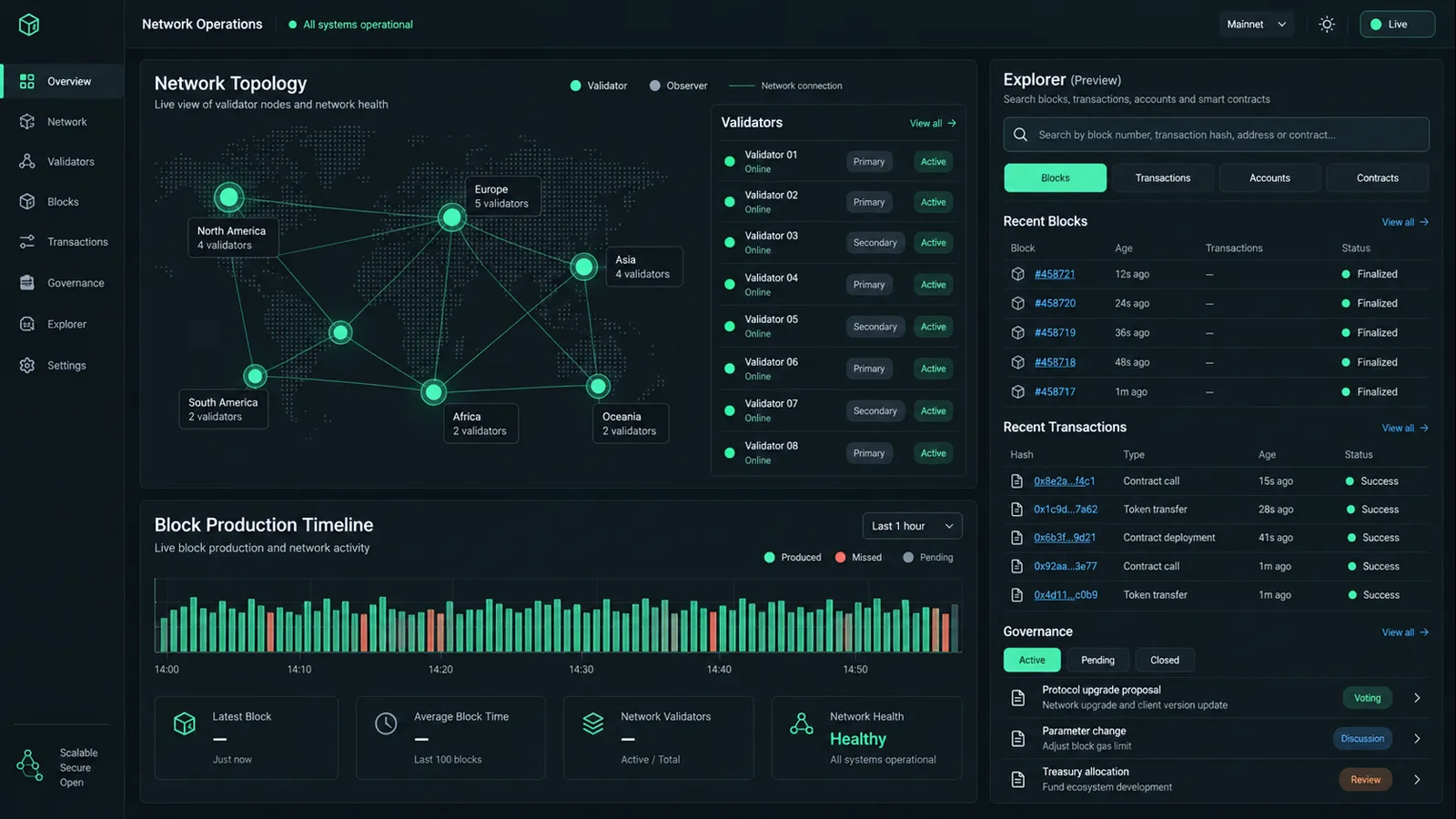
Operator responsibilities span the protocol-facing network, administrative controls, and service monitoring and response.
Use cases
Deployment considerations
Agree on supported protocol and version, network placement, access paths, key custody, upgrades, backup and recovery, monitoring, incident escalation, and who approves changes.
Integrations
Commercial engagement
Compare the available network and infrastructure products, then configure the desired scope. Any operational coverage, response target, or custom topology must be explicit in the resulting agreement.
Documentation
Check the existing catalogue and operator guides for product-specific scope and configuration information.
Trust and responsibilities
Key custody, protocol governance, service access, incident decisions, and recovery responsibility must be stated by party. Check product documentation and contract terms for included operations; this overview makes no availability or security certification claim.
Architecture resourcesPricing and procurement
Published prices and configuration estimates belong to the existing blockchain catalogue and configurator. Operator coverage, custom infrastructure, and support terms depend on the selected products and agreed scope.
Frequently asked questions
Not automatically. Review the selected product description and agree which party controls protocol decisions, keys, upgrades, and operational changes.
No. Confirm any service levels and support commitments in the applicable product documentation and written agreement.
Bring protocol, topology, key ownership, maintenance, and incident requirements to a review.